Why the Best Part of Shopping Happens Before You Hit Buy (And What to Do About It)
You know that feeling. You've been scrolling for twenty minutes, maybe more, and then suddenly—there it is. The exact thing you didn't know you needed until this very second. Your heart does a little jump. You read the description twice. You zoom in on every photo. You add it to your cart and sit with it for a moment, savoring the anticipation like you're holding a winning lottery ticket.
Then you buy it.
And somewhere between the confirmation email and the actual delivery, something strange happens. The excitement just... deflates. By the time the box is on your doorstep, you're almost going through the motions. You open it, glance at it, think yeah, that's the thing, and move on. Two weeks later, it's living on a shelf you barely look at.
If this sounds uncomfortably familiar, you're not broken. You're just human—and your brain has been running this particular program for a lot longer than online shopping has existed.
Your Brain Is Wired for the Chase, Not the Catch
Here's the short version of what's going on under the hood: dopamine, the neurotransmitter most associated with pleasure and reward, doesn't actually spike when you get something. It spikes when you anticipate getting it. The searching, the comparing, the imagining what life will look like once this item arrives—that's when your brain is lighting up like a pinball machine.
Once the purchase is made, the anticipation ends. And with it, so does a big chunk of that chemical reward. Psychologists call the follow-up feeling "post-purchase dissonance" in its more anxious form, but even without the buyer's remorse, there's often just a quiet letdown. The item is real now. It has limitations. It doesn't quite match the version you built up in your head during all that scrolling.
This isn't a flaw in the product. It's a flaw in how we're wired to experience wanting versus having.
Why Online Shopping Makes This Worse
Physical retail has always had this problem, but digital shopping cranks the dial up significantly. When you shop online, the gap between discovery and delivery turns that anticipation into a slow burn. You get to fantasize about the item for days sometimes. You revisit the product page. You read more reviews. You imagine exactly where you'll put it or how you'll use it.
By the time it arrives, you've essentially already "lived" with it a dozen times in your imagination. The real version almost can't compete.
On top of that, the sheer volume of options available online means we're constantly exposed to the next amazing thing, even before the current one has landed on our porch. The scroll never stops. The algorithm always has something new. Our attention is already moving on before we've had a chance to actually appreciate what we just bought.
The "Arrival Fallacy" Is Real and It's Expensive
Harvard psychologist Tal Ben-Shahar coined the term "arrival fallacy" to describe the mistaken belief that reaching a goal—or in this case, acquiring a thing—will bring lasting happiness. We tell ourselves, consciously or not, that once we have this item, we'll feel a certain way. Complete. Satisfied. Put-together. Cool.
And then it arrives, and we feel... fine. Normal. And so we start looking for the next thing that might finally deliver on that promise.
This cycle is worth recognizing not because shopping is bad—it genuinely isn't—but because understanding it gives you a way out of the loop. You don't have to keep chasing a high that the act of purchasing was never going to deliver in the first place.
How to Actually Enjoy What You Buy
So what do you do with all this? A few mindset shifts that genuinely help:
Slow down the anticipation on purpose. If you know the pre-purchase glow is the sweetest part, lean into it. Let yourself sit with something in your cart for a few days. Research it thoroughly. Enjoy the daydream. This isn't just a trick to avoid impulse buys—it's also a way to extract more real pleasure from the experience before you even spend a cent.
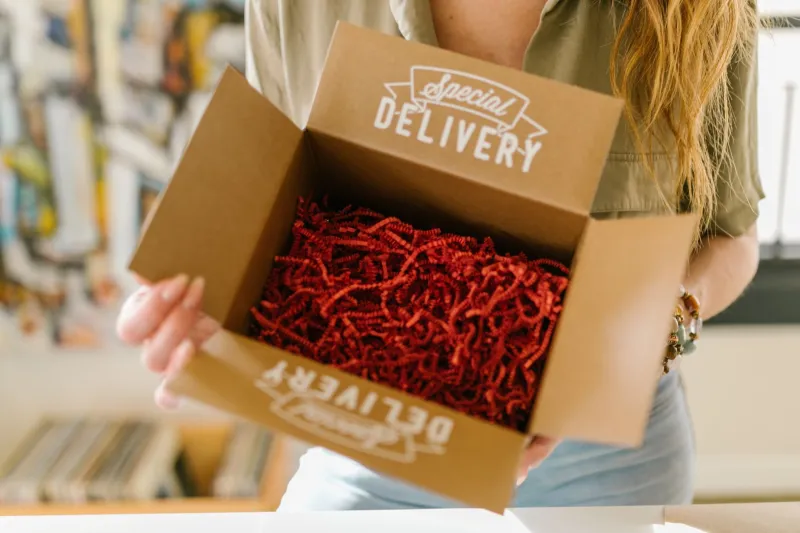
Set up a moment of arrival. Don't just rip open a package between meetings and toss it on the counter. Give the delivery a little ceremony. Clear some space. Open it slowly. Actually look at it. This sounds small, but it creates a mental bookmark that signals to your brain: this moment matters. It's the difference between inhaling a meal and actually tasting it.
Use new purchases intentionally and immediately. One of the fastest ways to let something fade into the background is to not use it right away. If you bought a new coffee gadget, make something with it that same day. New jacket? Wear it this weekend, not next month. The faster you integrate something into your actual life, the more real satisfaction it generates.
Practice a little post-purchase gratitude. It sounds cheesy, but taking thirty seconds to acknowledge why you bought something and what you like about it can meaningfully extend the good feelings around a purchase. Not in a forced way—just a quick mental note. This is nice. I'm glad I have it. That's it.
Audit your wishlist regularly. If you're someone who saves things constantly, go back and look at your list every few weeks. Notice which things you've completely forgotten about. That's a live feed of what actually matters to you versus what just caught your attention in a moment of scroll-induced enthusiasm.
The Spark Is in the Whole Experience
Shopping—real, intentional shopping—can be genuinely fun. The discovery part especially. There's nothing wrong with enjoying the hunt. The trick is just not only living in the hunt, and then feeling vaguely disappointed every time reality shows up at your door.
The items you bring into your life can genuinely add to it. That kitchen tool that makes Sunday mornings easier. The cozy throw that actually gets used every single night. The random find that turned out to be exactly right. These things deliver—just not in the form of a dopamine spike. They deliver quietly, over time, through actual use.
And honestly? That's the better deal. The spike fades in minutes. The good stuff sticks around.
So the next time you find something amazing and feel that little rush of excitement—enjoy it. Just don't let that be the only part you show up for.